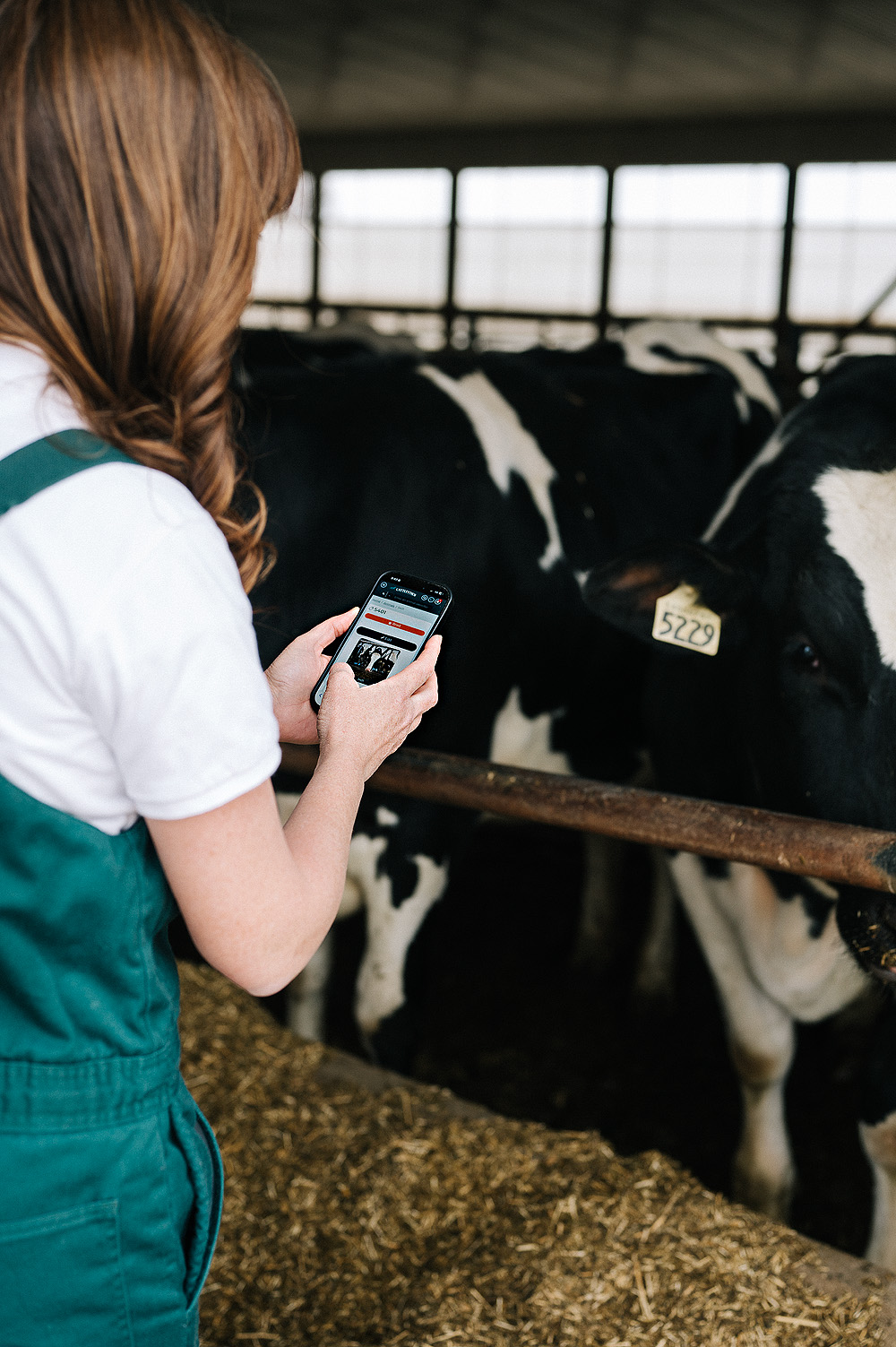
Artificial intelligence (AI) is revolutionizing dairy farming by optimizing breeding decisions, predicting genetic outcomes, identifying hidden issues, and improving herd health and productivity.
I remember sitting at a farm management meeting, surrounded by experts all gathered around the table. The dairy was progressive, forward-thinking, and open to bringing the best and brightest minds together. However, after discussing issues tied to their health, fertility and milk production – looking at all potential causes and solutions – they began to consider what set them apart from other dairies in the area and whether there was a gap anywhere.
The conclusion was that, overall, they were doing everything right. But their genetics were poor.
As a third party at the table, it felt like a heavy blow – even to me. All of their effort, precision and good planning from this point onward would still result in poorer outcomes on average compared to their neighbours, simply because their genetics were, on average, weaker.
I feel like this applies here, too. If your genetics aren't strong, you're starting with a disadvantage that's hard to overcome. And it could take two and a half years before you see significant changes.
Using the best tools available to get the most out of your breeding program is key – and we know that artificial intelligence (AI) is helping us make smarter, more data-driven decisions that ultimately improve the health, fertility and productivity of our herds.
Finding inbreeding with a precision that counts
Inbreeding is often a silent productivity killer, influencing fertility, disease resistance and more. AI can pinpoint both obvious and subtle genetic similarities between animals, especially when full genomic data is available, uncovering inbreeding risks that may otherwise go unnoticed.
Inbreeding is a sensitive issue in genetic selection, often leading farmers to consider switching semen providers if it's detected in a herd above a certain threshold. Holstein cows already have very limited genetic diversity – similar to having just 100-150 animals in the gene pool.
In the long term, natural or artificial selection may purge harmful recessive mutations, but recent inbreeding is a more pressing concern because newer harmful/deleterious mutations have not had sufficient time to be purged from the population. This is where AI comes in handy. It helps track recent genetic relationships and spot inbreeding risks early, reducing the chance of problems like lower health, fertility and productivity.
By removing the guesswork, AI offers farmers actionable insights that allow them to act quickly. With its ability to analyze vast datasets, AI is essential in maintaining genetic diversity and optimizing herd health and fertility.
Predicting genetic outcomes: The crystal ball of breeding
Imagine being able to identify which bulls will sire the next generation of productive, healthy cows, taking your farm's specific environment into account. This integration of diverse data sources allows AI to generate insights that are far more accurate and customizable than anything previously possible.
Dairy farmers are no strangers to making breeding decisions based on a blend of experience, intuition and instinct. Many breeding companies already use genetic data to predict breeding outcomes. But what if AI could do more? What if it could integrate not only genetic information but also epigenetics, gene expression and environmental factors, all while continuously refining its predictions through machine learning?
This would allow AI to predict, with impressive accuracy, the genetic and phenotypic outcomes of a breeding decision before you even make it. Fueled by genomics and biological data, AI can analyze complex patterns that would take years for humans to decipher. By integrating data from genomics, epigenetics and gene expression, AI can predict traits like milk yield, udder health and even temperament with unprecedented precision.
Optimizing breeding decisions: The ultimate strategy
If we can predict genetic outcomes, why not optimize the choices we make between conventional, sexed and beef semen? Most breeding programs already make recommendations, but by fine-tuning your milk production predictions and the genetic potential of current replacement animals, you can make more informed decisions for the next generation.
This enables you to select the best semen types to meet your farm's specific goals, maximizing both productivity and profitability while maintaining enough diversity in the herd.
One of the economic risks of using beef-on-dairy is the potential reduction in heifer inventory, which can leave a dairy farm without adequate replacements for future milk production. AI can mitigate this risk by forecasting the genetic potential of your heifer replacements, ensuring a steady supply of genetically superior animals. By optimizing breeding decisions, AI helps balance the need for beef calves – often used to capture the premium market – while maintaining a strong inventory of replacement heifers to keep your dairy operation sustainable.
Uncovering the hidden problems in your breeding program
Sometimes, despite our best efforts, something's off in the breeding program. Cows might not be getting pregnant as efficiently, or perhaps milk production or components are holding you back. It's hard to pinpoint the issue without a deep dive into the data. This is where AI can be a game changer.
AI can analyze thousands of variables, from cow health data to environmental factors to industry comparisons and highlight patterns or anomalies that point to underlying issues. Maybe it's a problem with heat detection or a genetic bottleneck you didn't know existed. AI can shine a light on these hidden problems, helping you take corrective action before they snowball into bigger challenges. The days of relying solely on hunches are behind us – AI helps us solve the puzzles we can't see.
Determining voluntary waiting period with data
One of the most challenging decisions in breeding is determining the right voluntary waiting period (VWP) for each cow in your herd, as well as the optimal age at which to breed heifers. If the period is too short, you might negatively affect the cow's productivity in subsequent lactations and lose valuable milk. If it's too long, you're losing valuable production time in the next lactation.
We are using AI to help determine the optimal VWP based on each cow's health, recovery and performance data. By analyzing individual cow data in real time, AI helps eliminate guessing at the best time to breed but helps make a well-informed, data-backed decision that can be fine-tuned for each animal. Optimizing your production within your own constraints and goals is key to economic success.
Comparing actual outcomes with genomic predictions
Most farmers use some form of genetic data to guide decisions aimed at optimizing future performance. But how often do we truly know if the predictions hold true in the real world? What if AI could consider your specific environmental situation? For instance, a cow that might thrive under heat stress might not perform well in a cold-weather climate.
By comparing actual farm outcomes with predictions made using parentage or genomic data, AI can help you assess the true outcomes of the best breeding decisions. How do your actual milk yield, fertility rates and cow longevity compare to the predicted values derived from genomics or parentage? AI will also help you refine these decisions over time, tailoring them to your farm. This feedback loop will allow you to continuously improve your breeding strategy, ensuring you're making the most accurate and efficient decisions possible.
The potential of AI in breeding programs is immense. It's a game changer for dairy farmers, and it's only going to get better. Beyond breeding, AI has the potential to revolutionize other areas of dairy farm management.
For example, automation of classification for type traits traditionally done by technicians could be standardized through AI and camera systems, eliminating technician bias and variations in data collection. AI has the potential to optimize day-to-day herd management by utilizing sensor data for real-time monitoring, improving animal welfare and enhancing productivity.
AI could even be applied to controlling the environmental footprint of dairy farming by breeding for traits that reduce methane emissions while optimizing for milk production. As we look to the future, the question isn't whether AI will play a role in dairy farming, but how quickly we can harness its power to transform the industry.
By embracing AI today, we can unlock a brighter tomorrow for dairy farmers, where data-driven decisions drive success and innovation meets tradition to create a more sustainable, productive and profitable future.
Originally published on AgProud